
Should We Abandon the Canon?
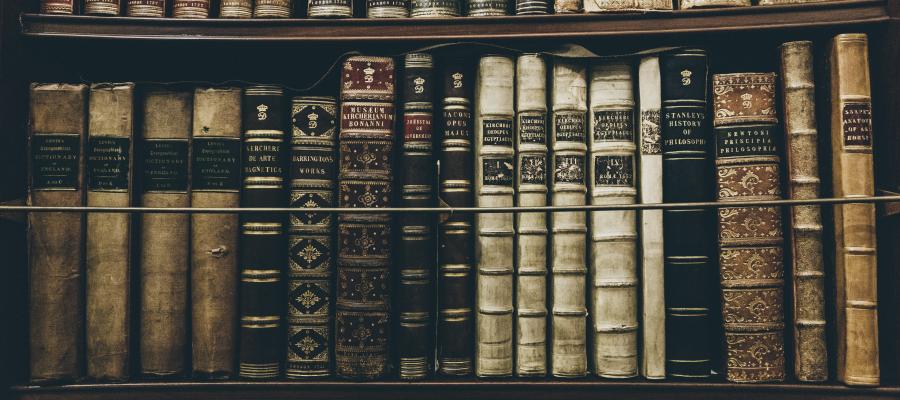
Should we still be venerating works by Plato, Shakespeare, Woolf, and company as “great books”? Should we still be reading them at all? Or should we simply abandon the “Western canon”? These are the questions we’re asking in this week’s show.
Should we still be venerating works by Plato, Shakespeare, Woolf, and company as “great books”? Should we still be reading them at all? These are the questions we’re asking in this week’s show.
Critics of the “Western canon” make two very reasonable arguments. First, that canon is heavily dominated by straight white males. Some of the reasons for this may be contingent, but there’s still a very real danger of readers coming to believe that straight white male voices are the only voices that count. Or, even worse, that straight white males are somehow more talented as thinkers and writers than anyone else. That, clearly, would be a terrible result.
Second, the canon stretches back to a distant past with attitudes very different from those of our own. Its texts often make highly troubling assumptions about gender relations, sexual preference, race, and empire—attitudes that generally go uninterrogated. At times, these texts even make arguments defending such prejudices, as when Aristotle infamously claimed that some human beings are born to be slaves. That wasn’t just a weak argument; it was a dangerous argument, one that helped to license a centuries-long history of oppression.
Given how widespread the bad ideas are (Horace on women, Rousseau on “noble savages,” Dante on homosexuality…), it’s understandable that some have started to see the entire cultural history of the West as a history of oppression, and its “great books” as simply a collection of specious justifications for it.
But defenders of the canon might counter—equally reasonably—that Western culture isn’t a monolith, and that the “great books” aren’t either. While Mill celebrated democracy, Plato despised it. While Adam Smith loved capitalism, Jean-Paul Sartre hated it. While Dante saw Hell as something created by eternal love, Nietzsche wittily countered that Heaven was created from eternal hatred. And while some biblical authors wrote against same-sex love, Sappho championed it in beautiful verse. The canonical authors agree about almost nothing.
What’s more, many of these authors were firebrands, at least in their time. Quite a number of them, including Montaigne, Descartes, Locke, Rousseau, Kant, Diderot, Mill, Sartre, and Beauvoir, ended up on the Vatican’s “index” of banned books. If you’re on the Index, surely you’re doing something right! Some, like Socrates, Jesus, or Giordano Bruno, died for their countercultural beliefs. While people like Dante were busy reinforcing the status quo, these radicals called, at least to some extent, for liberation, whether from priests, tyrants, bosses, chauvinists, imperialists, materialists, or the patriarchy.
It’s also important to remember how influential these texts have been. Many of today’s literary writers draw on earlier texts—think of all the allusions to Homer’s Odyssey in Toni Morrison’s Song of Solomon. And many beliefs and practices we take for granted today have their origin in centuries-old writings. Can we fully understand our present unless we know something about the past? (Consider what a difference it makes to know what the words of the Second Amendment meant at the time.)
And let’s not forget, finally, that some of the books in question are works of great beauty (Sappho’s lyric, Shakespeare’s sonnets, Pride and Prejudice…), works that brought important new aesthetic options into the world. Even when those works are flawed, I’m not sure we should always choose to stop reading them. Ralph Ellison’s Invisible Man, for example, is perhaps somewhat weak on gender but brilliant on race and identity, and stunning in terms of its formal innovations. That’s a book I’d really want to keep around. In cases like that, I’d hate it if the baby got thrown out with the bathwater.
So what should we do with the canon? My tentative proposal would be threefold. First, we should continue to expand it, by including more writers from historically disadvantaged groups. Second, we should read it critically. And we should teach others to read critically; readers must never assume that the “canonical” authors are right about everything, or even that they are taken to be right about everything. Matthew Arnold was wildly wrong when he depicted the canon as “the best that has been thought and said”: it’s so much less than that, and it’s also so much more than that.
Finally, we should read the canon for more than just ideas. At its best, the canon isn’t a set of statements: it’s a set of questions. It’s a conversation. It’s an invitation to its readers—all readers—to continue that conversation, finding ever better answers amid changing times. It’s a playground in which we can cultivate important habits of mind. And it’s a set of models for how to write beautiful books.
We can never be complacent about the “canon,” since its dangers will always be with us. But if we work hard, I believe we can inoculate people against those dangers. And if we do so, we’ll open up a whole world to future generations of readers eager to become part of the age-old conversation.