Repugnant Markets: Should Everything Be For Sale?
March 28, 2021
First Aired: June 3, 2018
Listen


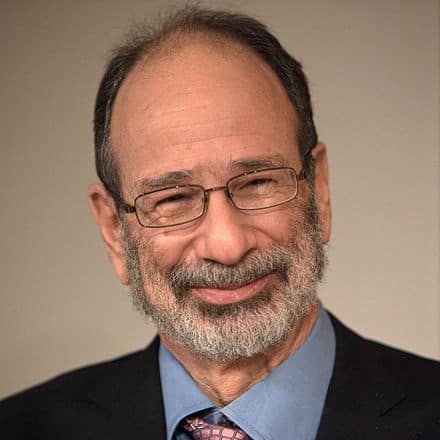
We might ban buying or selling horse meat in the US not for the protection of horses, but because we find it morally repugnant. Yet this moral repugnance is clearly not universal, and on some level may even be arbitrary, given France’s attitude toward horse meat. What role, if any, should moral repugnance play in determining the rules of our marketplaces? Even if we want to eliminate the influence of moral repugnance, can we? Debra and Ken hold their noses with Nobel Prize-winning economist Al Roth, author of Who Gets What ― and Why: The New Economics of Matchmaking and Market Design.
Ken Taylor
What’s so bad about buying and selling things like sex or kidneys?
Debra Satz
Should absolutely everything be for sale
Ken Taylor
Or are some things to repugnant to even allow?
Debra Satz
Welcome to Philosophy Talk the program that questions everything…
Ken Taylor
…except your intelligence. I’m Ken Taylor.
Debra Satz
And I’m Debra Satz.
Ken Taylor
We’re here at the studios of KALW San Francisco.
Debra Satz
Continuing conversations that begin at philosophers corner on the Stanford campus where Ken and I teach philosophy and
Ken Taylor
Today we’re thinking about repugnant markets and asking, should everything be for sale?
Debra Satz
Obviously, not. People shouldn’t be for sale.
Ken Taylor
That’s the easy case to ever because nobody can own a person. You can say, Oh, you don’t own but if I can own it, why can’t I sell it?
Debra Satz
Well, you do own your body. Yet in many places selling sex is prohibited.
Ken Taylor
Well, but the question is, why should it be because it’s degrading. Oh, that sounds outmoded puritanism. Deborah, I must use surprise, we have two consenting adults, or even more than two consenting adults want to trade money for sex with each other, whose businesses it but there’s
Debra Satz
look, a lot of women go into prostitution because they’re desperate. Banning prostitution protects them
Ken Taylor
protects them from what themselves? No, no, no, you’re sounding a little paternalistic, Deborah.
Debra Satz
Oh, come on, from pimps from exploitation. It’s about respecting human dignity. Oh,
Ken Taylor
well, I’m all for dignity.
Debra Satz
I’m glad to hear that cam. Well,
Ken Taylor
but but the My question is, what do our feelings of repugnant have to do? Really, what do they tell us about the dignity?
Debra Satz
Well, people have visceral reactions to violations of dignity,
Ken Taylor
and you trust those visceral reactions? Come on, people used to find the idea of selling life insurance repugnant of all things, it put a price on human life and then place a bed and when the life would go expire, they thought that violated human dignity and people once found the idea of interracial marriage or gay sex repugnant? What about that?
Debra Satz
Well, okay, I grant you those aversions were irrational. But we’ve made a lot of progress,
Ken Taylor
maybe. But the this idea of progress presumes that our aversions, our patterns of disgust, track moral truth better than their patterns did what what why should you think I think that they do, but why I mean, come on, take California, the voters of California in their infinite wisdom a few years ago, Ban the sell of horse meat for human consumption by a referendum. Why? Well, because eating horses is disgust us and disgust us more than eating cows.
Debra Satz
Really? Look, I’m not saying we should always trust our visceral reactions, but we shouldn’t totally ignore them either. Sometimes they’re trying to tell us something morally significant, maybe,
Ken Taylor
maybe. But you know, the problem is that what seems morally significant to you may not seem so morally significant to me. It’s all subjective. Deborah, why should the end? And besides, given that, why should the fact that other people find something degrading say like selling sex, determine what I can buy or sell, especially if I don’t find it degrading, and neither does my economic partner?
Debra Satz
You know what? It’s not just about you can when you buy a gas guzzling car, or you smoke cigarettes, you impose costs on other people. Okay,
Ken Taylor
I get that point. You’re talking about what economists call externalities, right? I mean, harmful, harmful effects imposed on third parties who are not involved in some economic transaction?
Debra Satz
That’s precisely what I’m talking about. And I’m saying that when markets impose externalities, we have a right to regulate those markets, or sometimes even to ban them altogether.
Ken Taylor
I get that point. But I’m not denying that boy. But you sounds like you’re implying. I don’t know if you mean to that your disgust and my economic choices is unacceptable externality I, I shouldn’t be free to sell my own body parts to a willing buyer because it makes you also squeamish.
Debra Satz
Look, it’s not the squeamishness in itself. It’s the fact that I feel squeamishness is because of the violation of dignity and justice. Oh,
Ken Taylor
wait a minute, slow down. 1000s of people languish on waiting lists for kidneys hoping against hope for a kidney so they don’t die. And they’re languishing all because people with delicate sensibilities find kidney Margaret Oh, repugnant. You call that justice? Really?
Debra Satz
Look, Is it justice if poor people have to sell their kidneys and only rich people can afford to buy
Ken Taylor
them? Well, maybe some poor people wouldn’t be so bored if they could, like sell their kidneys to the highest bidder?
Debra Satz
You know, I can. That’s repugnant. Kidneys should go to the people who need them the most, not to the people who can pay the most.
Ken Taylor
Look, look, I’m not a worshipper of markets, anything goes markets. I grant you that need to be well designed and need to be well regulated. But the problem is, we can’t just let mere squeamishness keep us from even trying to make markets work. Look,
Debra Satz
I admit that as long as markets don’t diminish human dignity, they’re important social institutions, they can do good things.
Ken Taylor
Okay. So I think I think I see a way forward here. So if we could find a way to strike just the right balance between respecting human dignity and letting the market operate efficiently, maybe maybe we could agree so so how do we do that you got an idea? Can That’s
Debra Satz
a complicated question. And to show us just how complicated we sent our roving philosophical reporter Liza veal, who spoke to someone who took a deep dive into the ethics of buying and selling human organs. She files this report,
Liza Veale
Alexander Berger remembers when he first started thinking hard about inequality in the world. He was a college student taking classes in philosophy and social justice.
Alexander Berger
And I was spending a lot of time thinking about like, sort of what are my ethical obligations to the world obligations to the global poor? And what should I do with my career? And how could I have the most positive impact in the world,
Liza Veale
this kind of thinking led him to certain action. He remembers learning about factory farms and becoming a vegetarian. He also learned about the shortage of organ donations. So even though he didn’t know anyone that needed one, he decided to give up one of his kidneys, part
Alexander Berger
of the way I thought about it was like kind of a relatively, like, easy, cheap way, actually, to help somebody else, you know, by burying a one in 3000 risk to myself, I could really like give somebody else 10 more years of life.
Liza Veale
His kidney to him was an abstraction, not something he’d miss or even know was gone
Alexander Berger
somewhere, like, feel like much more connected to their bodies than I do. Like, I think like Catholic bioethicists, like, feel like there’s this like really important like sanctity of the body as a whole, that I don’t identify with that much.
Liza Veale
So he decided to do it, he’d undergo a surgery and a reasonable recovery period and the recipient
Alexander Berger
middle school math teacher in rural Pennsylvania, she has two teenage sons would be able
Liza Veale
to get off of expensive, debilitating dialysis, and would expect to live decades longer. It was a gift to her and her two children and everyone who loves her. It’s beautiful. And yet, every year fewer than 200 people in the US are like Andrew Altruistic donors, meaning that they donate while they’re alive to a stranger. This despite the campaigns to promote donation, I’ve been waiting 123 days for hard transfer 736 days for a heart. For five and good day, there are 10s of 1000s of people on the waiting list at any given time. Berger understands that most people don’t think about this problem like him. I feel
Alexander Berger
like I’m the weird one and and the idea that like, I sort of had this like burden of like consistency and like really thinking things through. I think I kind of recognize that’s not how most people are approaching the world.
Liza Veale
If there were a legal market for organs, some argue we’d be able to increase the supply to help meet demand and save lives. But the camp standing in opposition is equally passionate.
Gabriel Danovitch
A donor is a patient. He is not a piece of meat or a piece of Lego.
Liza Veale
Dr. Gabriel Danovitch is a Professor of Medicine at UCLA, and a representative of the Declaration of Istanbul, which calls for the global prohibition of organ trade. That means black markets and even legal ones like Iran.
Gabriel Danovitch
It’s a medical procedure with complications. As a Doctor Dan
Liza Veale
of it says paying for organs compromises his work, it puts doctors in the position of exploiting people who need money. Because while Altruistic donors almost always feel good about what they do, basking in what he calls a halo effect. When people give up organs out of financial necessity, he says they experience it as harm.
Gabriel Danovitch
Those who have donated for money to uniformly have depression, impairs self worth, increase into divorce, etc, etc.
Liza Veale
He believes money also compromises the safety of the procedure,
Gabriel Danovitch
organs from paid donors. They’re much riskier because pay donors when there’s money involved may not be telling the truth,
Liza Veale
meaning they may not disclose their risk factors if it could prevent them from being approved. But most of all, he just doesn’t believe it will work. He predicts that legalization wouldn’t result in more organs becoming available
Gabriel Danovitch
commercial living, unrelated donation displaces non commercial, living, unrelated donations, it doesn’t add to it, it takes away from
Liza Veale
that’s because people only give up organs for their loved ones because they have to when a market is introduced, data shows that people will use that market and opt out of unpaid donation. Though with any of this data. It’s hard to compare legal and illegal organ markets in other countries with hypothetical ones in the US that fundamentally Dennett says it’s cruel and repugnant to decide as a society to exploit the fact that some people have to resort to selling their body parts. If we want to help poor people. He says we should help poor people not offer them money for their organs.
Gabriel Danovitch
Is that a society we want to live in? That for a poor person in order to pay for their mortgage? Is that our response to our society that because you’re foreclosing your house, you’re gonna sell an organ.
Liza Veale
That’s the argument that counts when it comes to public opinion. But the problem with this argument is, it’s hard to pin down what makes paid organ donation different from any other paid labor. Almost none of us do what we do for money freely, and plenty of it involves bodily risk. We do it to survive. For Philosophy Talk, I’m Liza veal.
Ken Taylor
Thanks for that morling retching tour through the world of organ donation around the world lies. I’m Ken Taylor with me is my Stanford colleague, Deborah SATs. And today our topic is repugnant market.
Debra Satz
Today, we’re joined on the air by Al Roth. He’s professor of economics at Stanford University and winner of the 2012 Nobel Prize in Economics for his work on market design. He’s the author of a large number of influential papers and books, including the recent book, who gets what and why. Owl, welcome to Philosophy Talk.
Al Roth
Thank you.
Ken Taylor
So I know you just started out as an engineer. So I’m wondering how did you get interested in designing markets rather than things like cars, because that’s what engineers do.
Al Roth
I studied a kind of engineering called operations research, which in the 1970s, was mostly concerned with the operations of companies and single minded organizations. And I was interested in how people cooperate and coordinate with each other. So I was naturally led to things like studying markets and how they should be designed to work well and, and fixed when they’re broken.
Debra Satz
Out on the opening section, Ken and I went back and forth as to whether repugnance has a legitimate role in limiting markets. What do you think?
Al Roth
Well, let me try to answer first, as a social scientist, it has a big role in limited markets, you can’t think about designing and changing the way markets work without coming into contact with the fact that markets require social support in order to work well, and transactions that are regarded as repugnant don’t have social so
Ken Taylor
yeah, and I was reading some of your work about this and the number of historical examples in which are repugnant to the idea of buying and selling stuff. Some stuff that we now routinely buy and sell has, like prevented people for like centuries, from buying and selling those things could give us some examples of that
Al Roth
way of charging interest on loans is, is one we could hardly have the global capitalist economy that we have today without a market for capital.
Ken Taylor
I know the Bible says something about usury. But was it just religious scruples? Why did it take so long for people to?
Al Roth
Well, I think that as capital started to accumulate, people had had scruples about making money from your money using your money to make money.
Debra Satz
So I want to push on the opposite side of the equation here, because there are also a lot of markets, we should have found repugnant. We didn’t find repugnant, like the buying and selling of Pete human beings, slave markets, right, slave markets were seen as legitimate, you know, kids were sold. There were a lot of early markets that we, you know, we allowed that now, we think it was a mistake to allow these. So I want to ask more about I want to underline the point of the question that I asked you. So you answered the descriptive answer about the role repugnance plays, but I’m interested in the moral if there’s a moral justification for that role, not just describing the role, but actually evaluating when it’s appropriate. So
Al Roth
So, economics is about how we get together to improve our welfare. And of course, there can be moral dimensions to whether our welfare has improved so I would, I certainly wouldn’t rule out a an appropriate role for repugnant and limiting markets.
Ken Taylor
You’re listening to Philosophy Talk today, we’re thinking about markets and their limits with Al Roth from Stanford University. Why do
Debra Satz
people have such diverse reactions to different kinds of markets? Is that really a moral difference between selling a kidney and selling a car, and who decides when we disagree about what’s repugnant
Ken Taylor
markets morality and disgust plus your calls and emails when Philosophy Talk?
First selling your monkey is giving you the blues, maybe the monkey shouldn’t be for sale. I’m Ken Taylor. This is Philosophy Talk, the program that questions everything
Debra Satz
except your intelligence. I’m Debra sets, and today we’re probing the idea of repugnant markets. Our guest is Al Roth from Stanford University. He’s a Nobel Laureate in economics and the author of who gets what, and why.
Ken Taylor
So I want to pick up on the kind of question Deborah was getting you the dress, I want to put a different spin on it, though. So our ancient, our predecessors, they were things that they wouldn’t buy intel that we gladly do. There are things that they would buy and sell that we wouldn’t like slaves, human slaves, children, child labor, okay. From an economists point of view, is this just oh, well, fads change culture changes? Or is there some principle that we should we can appeal to the say, well, those things should be marketed? And those things shouldn’t? Or is it just, you know, the culture, the fads, the emotions of the moment.
Al Roth
So trade in slaves wasn’t trade that was voluntary on the part of every party. So I think it’s very different to talk about trading slaves then to talk about whether, if you wanted to give me a kidney, whether I could pay you for it,
Ken Taylor
you’re very different. But I’m still wondering, okay, so let’s rule out the case of slaves. They were really bad about that. But I still suspect there are things that we think shouldn’t be marketed that they marketed and things that should be marketed that they wouldn’t, and I want to know how to decide what’s the really the role of repugnance in deciding what it’s legitimate to buy and sell. Okay.
Debra Satz
I want to also just because you said, rightly, that the slave market wasn’t a voluntary transaction between two parties. The notion of voluntary is arguably a normative. It’s a moral idea. And there’s a question when somebody is desperate, whether or not a an exchange that somebody makes in conditions of desperation, or very asymmetric bargaining position is really best understood as a voluntary position. So do economists think about this? If you’re thinking about markets as voluntary transactions, do you kind of probe what you mean, in these cases by voluntary?
Al Roth
I think, I think economists think about that at least a little bit. If you point a gun at me and say, Your money or your life, that might, at the moment, be a voluntary transaction, but you pointed the gun at me, there’s a problem there. Yeah. But
Ken Taylor
I still I want to get back to Okay, yeah, I get that. So we could, we could probe the notion of voluntary, but it’s not that anything voluntary goes in terms of whether we find it repugnant to the markets, let’s Well, you might say they’re desperate, but they go back to the example I read about a year thing in life insurance markets, right? I mean, some insurance sells me insurance, I buy the insurance. It’s all voluntary, right? I buy it with the idea of ensuring my family’s well being after the repugnance doesn’t have to do with the non voluntary ness of it.
Al Roth
repugnance doesn’t only have to do with voluntariness.
Debra Satz
But I thought we’re trying to think about or the question you were asking was about the legitimacy repugnant? And you might think, you know, if you want to, like when is it legitimate? One reason it might be legitimate is when it leads to third party harms, externalities, which we mentioned before. Another reason might be when it’s picking up something about the background conditions under which people are transacting that is problematic, and people are really repugnant, because of the either unequal bargaining position of the two parties, where they think there’s some unfairness or because they think there’s desperation involved in the transaction.
Al Roth
Some of the arguments that are made along those lines could be and sometimes are addressed at any form of trade. And by and large, as an economist, I’m here to tell you that a lot of the progress that human beings have made in the last 10,000 years since the invention of agriculture come from trade. So of course, we are legitimately think about limits on trade, but we we shouldn’t be too broad a brush. But
Ken Taylor
wait a minute, okay. I still want to I want to get out this legitimacy thing in another way. Here’s something else that I think kidney markets, right? Many people I was reading the script to some friends and I read our opening question, Should sex and kidneys be free? They were like, Yeah, right. Okay. Many things we think shouldn’t be for sale. And why? Well, you could donate. You could donate your kidney. Nobody goes yuck at a donated kidney. They go yay, to the kidney donator. Why is it? So that’s if it’s out of altruism. People say yay, but if I’m out of an economic bargain, where my self interest is implicated people go, boo. Why is that? Why is it worse to do something on a self interested calculation than to do that very act out of altruistic calculation?
Al Roth
I don’t know the answer to that. But surely, that was part of what was an issue in thinking charging interest on loans was was illegitimate, was that somehow money is a a different way of relating to each other than then some other kinds of relations. Right.
Debra Satz
And we do think that you know, Money can be an inappropriate way of relating, I could bring you a bottle of wine for dinner, or I could write you a check. Those seem like very different acts.
Ken Taylor
Yeah, that’s true. But that doesn’t see, if I were to write my guest to check my hosted check for the dinner. That seems crass, or something. I don’t know what it seems it seems really inappropriate, but not repugnant in the way that kidney cell sales.
Debra Satz
So I want to go back though to so you responded to the worry about background unequal conditions about trade by saying look, betrayed has produced these wonderful things. I grant that but sometimes what the repugnance is telling us then as if we want to allow the trades to go on, we ought to attend to the background conditions, and we ought to make the background conditions fair, we ought to care about making sure that people are in in desperate conditions so that they are, you know, find themselves in a situation where they have to put their kids to work, or they have to sell an organ in order to survive.
Al Roth
It’s certainly good to try to address those conditions. It’s not always clear that we should wait until those conditions have been addressed to address the problems of the people who have those difficulties today. Obviously, it would be great to have a cure for kidney disease so that we didn’t need to do any transplants.
Ken Taylor
So there I want to ask you a question. Do you believe in what I think Leon Kass calls the wisdom of repugnance? Where I repugnant is like this is this indicator, that non rational indicator of the moral good and the moral bad, and we should attend to it even if we can’t fully justify it?
Debra Satz
You know, I think that lots of our repugnance is irrational. So I think we want to, you know, actually distinguish, you know, when is there something behind the discomfort people feel with a certain kind of transaction? And what, what is the basis of it? And then can we address it? Sometimes we can address it through regulation. So for example, by, you know, externalities, we can price the cost of the externalities and absorb them into the market. Sometimes we can’t. And, you know, in those cases, we have reason to worry. So
Ken Taylor
I wonder what you think of that kind of answer as an economist, I mean, how does the economy I mean, the philosopher is going to worry about what the repugnance is telling us and when it’s a legitimate indicator, and when it’s an illegitimate indicator, and when we ignore it, that’s what the philosophers gonna worry about. But what about an economist? Are you gonna worry about that?
Al Roth
I worry about that. But I noticed that repugnance is highly variable. So here in California, surrogacy is fully legal. In other states, it surrogacy is legal, but you can’t pay for it. And in other countries, it may be entirely illegal. So it’s not a human constant, that we all find the same things repugnant,
Ken Taylor
it makes it very hard for you as an economist to deal with it. It makes
Al Roth
it hard for me to think that repugnant itself is a reliable guide.
Ken Taylor
Right? You’re listening to Philosophy Talk, we’re talking about repugnant markets. And Michael, all the way from Boston’s on the line Welcome to Philosophy Talk, Michael.
Speaker 1
All right. I’m wondering, or I’ve often wondered why, at least what in America is called a libertarian in Europe to be a right libertarian is not an anarchist. Because you were talking, The Economist was talking about things being voluntary and about the progress that has been made because of trade. But why should those be given any particular weight? You know, what makes something what makes something a societal value? What makes a society?
Ken Taylor
Mike, I’m not quite sure I get your question and how it relates to our discussion of
Unknown Speaker
it’s like the question of repugnance, in a way,
Ken Taylor
because it’s in the eye of the beholder. How can the society regulated? Is that your question?
Speaker 1
Yes. The objection to repugnance is that it’s so variable, so has been repugnant at the notion of things being voluntary.
Ken Taylor
Thank thanks a lot. Well, I don’t think voluntary voluntariness is quite in the eye of the beholder. But, but but the underlying question is when we have these contested things, right, where you have one view, and I have another, what are we supposed to do as a collectivity in terms of regulating these are what I mean? Do you have a view about that?
Al Roth
So I think some things are widely reviewed, viewed as having improved our welfare, a baby born in the United States in 1900, had a life expectancy of 40 years and today, it’s more like 80 years. I’m not a philosopher, but I think that’s a good thing.
Debra Satz
Right? Although, I mean, I do too, and philosophers think that’s a good thing too. But, you know, I just want to in response to the caller, I mean, markets are always regulated. I mean, you know, there isn’t any such thing as a market without property rules. For example, you have to have rules about who owns what and who can do what with what so, you know, markets always you know, as you know, the saying goes, market bargaining. happens under the shadow of the law. Right? There’s
Ken Taylor
it libertarians. I know they’re a little confused when they when it comes to this question, but we got another caller on the line. Oh v. Baker in Oakland. Welcome to a Philosophy Talk. What’s your comment or question? Oh, V.
Speaker 2
Hello, Pinterest taking my call. I had a I had a quick question. The question is that, I want you to comment on Karl Polanyi. His notion of fictitious commodities, namely labor, and I think he also admit labor and land. And I hope everybody is very familiar with Karl Polanyi. His ideas on fictitious commodities. I hope you get familiar with it.
Ken Taylor
Does that have to? Does that have something to do with our show? Our episode? Yes. Yeah. Okay. Okay. Okay. Thanks for the call.
Debra Satz
So I can I can respond to that, you know, Palani has this view that labor markets and land markets have are different than other kinds of markets. And, you know, that was a view that Adam Smith held. And Ricardo thought there was something special about land markets. So but but the kind of analysis that was given is very consistent with this idea of externalities and feedback effects and inequality. So there were, you know, dimensions that we’ve already touched on, but that that Palani thought were especially salient in labor markets,
Ken Taylor
so that the sell of human labor, so the sale of human labor is a repugnant market,
Debra Satz
it can be a repugnant market, because there’s a feedback loop on the way labor is bought and sold, can actually change the worker. Right, right. So a slave is different than a free labor, even though both in both cases you’re exchanging kind of
Ken Taylor
I think the point there for our discussion, is that poorly structured without the right kind of guarantees, and that will give us respect for human autonomy, blah, blah, blah, any market can be a degrading thing, right? I mean, markets have this intrinsic potential to degrade things. What do you think of that?
Al Roth
Well, I’m a market designer. So I certainly think that markets need effective rules. And, you know, there’s a great quote from from Hyack in the Road to Serfdom, in which he says that the, what he calls the liberal, the big enemy of the Liberals are the people who cry without thinking laissez faire, because markets need rules.
Ken Taylor
Right? Right. So I mean, think, think about labor markets. I mean, I suppose there’s a kind of Marxist Marxist thought, I mean, I’ve Marxist Marx, as I understand them, going back to Marx thought that capitalism was great progressive force in a way. But it was also it also had the seeds of its undoing, partly because of the nature of labor within a capitalist economy and wage labor and all that. What do you think about thoughts like that?
Al Roth
So it turns out to be hard to put absolute values on things. And the the sort of labor theory of value is one that’s hard to incorporate with all the different modes of production. On the other hand, there, it’s clear that we want to regulate and think about how markets work when we’re concerned about things like inequality.
Ken Taylor
Right? So okay, there we go. Call our take this color right before the break. Dave in San Francisco, what’s your comment? Your question?
Speaker 2
I’ll be quick, live with people think selling kidneys is a bad idea. Suppose somebody had lost a finger in an accident, and they wanted a replacement finger and their surgeon thought that was feasible. And I wanted cash because I needed it, and was perfectly happy to part with my little finger for cash. I think many of us would not find that repugnant. And my question is,
Debra Satz
I think I would,
Al Roth
I might as well.
Speaker 2
Question is, why is it different? I think part of it is that it’s over. It’s open. Everybody can see I sold my finger is gone. So I could kidney. And it’s a pretty predictable effect. That is if you sell your kidney and then your other kidney goes bad. That’s a very bad outcome. Whereas if you sell a finger you pretty well know what you’re getting into.
Ken Taylor
Yeah, Dave, thanks for the call. I don’t know about you guys, but I would find somebody who said their kid fingers kind of perverse. I didn’t know what do you think?
Al Roth
I believe that teeth used to be sold the you know, my no cop talked about this.
Debra Satz
Right? And hey, are you uh, you know, here is still sold and used to be sold. Like,
Ken Taylor
I could see I could see selling. I could see selling rather than donating blood, right? You want my blood? Give me some money. I’ll give you my blood. I could see because it’s a replenishable supply Well, you know why not blood market there’s people have objections to blood markets they do
Al Roth
indeed and in most places whole blood is given voluntarily. But plasma is sometimes bought and sold and sometimes given for free. Canada is just in the process of passing laws against paying for plasma. But Canada buys 10s of millions of dollars of plasma products each year from the United States where, where it’s okay to pay donors, you’re listening
Ken Taylor
to Philosophy Talk, we’re exploring the topic of repugnant markets with our raw author of who gets what and why can we
Debra Satz
change the way that people react to markets? And can we make repugnant markets less repugnant? What should we do when repugnance prevents a useful market from forming
Ken Taylor
making moral markets when philosophy talking continues?
If there’s a willing buyer and seller for everything does all repugnant at the sale even matter. I’m Ken Taylor, and this is Philosophy Talk, the program that questions everything except
Debra Satz
your intelligence. I’m Deborah sets, and our guest is Al Roth from Stanford University. He’s the author of who gets what and why. So I know
Ken Taylor
you’ve been working on kidney markets and working on ways to allow kidneys to be traded between people that overcomes this repugnance. I’m going to I want you to tell us a little bit about that. And then I want to expand the discussion more broadly.
Al Roth
Okay. So kidneys are a little special, because Healthy People have two kidneys, and can remain healthy with just one. And so if, if you’re as healthy as I hope you are, and you loved someone who needed a kidney, you could save their life by giving them a kidney. But sometimes you’re healthy enough to give a kidney, but you can’t give it to the person you love. And if I’m in the same situation, it might be that I can give a kidney to your patient and you can give a kidney to my patient, and we can save two people’s lives that wouldn’t otherwise. So
Ken Taylor
we trade donors in a sense, yes. Right. So I mean, that sounds cool. Is that legally problematic? I mean, it’s not quite a kidney market, but you’re giving this person a value something in exchange for that thing of value. It’s a little bit like
Al Roth
so. So it wasn’t clear whether it was legal. The 1984 National organ transplant Act says you can’t give valuable consideration for kidney. But once kidney exchange had started happening in the US the congress passed an amendment called the Norwood act that says that sentence about valuable consideration doesn’t apply to kidneys.
Debra Satz
How big can these trades go? How large?
Al Roth
Well, if we if we have a non directed donor like Alex burger, sometimes you can form a long chain, and the longest chains have had now 70 or 80 people in them so I have transplants in half.
Ken Taylor
I wonder if I were this believer and slippery slope kind of arguments that this is the entering wedge of like, kidneys being available in an open market to any to to somebody who needs a kidney. I mean, right? Here’s the kidney. You got a donor that needs this kidney, they can’t get yours. Okay, okay. No, we’ll just take away that donor you need. You need a kidney, it seems like it’s the opening words. Why don’t I believe such things? Well, I’m
Al Roth
not sure that you shouldn’t believe them. But if you do believe them, it shouldn’t be kidney exchange that bothers you. It should be living donation. Yeah. Once there’s living donation, there’s the possibility that you paid the donor and American hospitals work hard at filtering out paid donors, but But surely they’re not 100%. They shouldn’t
Debra Satz
we worry if kidneys are distributed from poor people to rich people, if that’s the implication, I mean, that’s part of what people are worried about, because, you know, your kidney exchange, seems, I think, like a really great thing and probably doesn’t elicit much repugnance, but put cash into the equation. And then people are going to be worried that you’re going to have rich people buying all the kidneys up and poor people selling them And shouldn’t we be worried about that?
Ken Taylor
Before you answer that question? Let’s just get the empirical question. Is it true? I mean, has anybody tested the hypothesis that this kind of exchange does not elicit repugnance the repugnance at open markets? Why is that true? So
Al Roth
the Norwood act that said it wasn’t illegal was passed without dissent in Congress. So it didn’t seem to elicit much repugnance among Americans. But in Germany, kidney exchange is almost non existent, because the German law says you can only receive a transplant from a member of your immediate family. And while a judge can make an exception to that there are very
Ken Taylor
few exceptions. So you mean that if your My even your mechanism would be prevented by German mores, or norms or something? Yes, all
Al Roth
relative sinless? Yes, yes. Well, but if you wanted to give a kidney to your brother but couldn’t get I wanted to give a kidney to my brother. They wouldn’t allow me to give a kidney to your brother without a judge intervening. So
Ken Taylor
so that’s okay. So it might still be regarded repugnant in some places, though less so in say the US the kind of exchange that you’re talking about, but then Deborah’s issue?
Al Roth
Well, so. So just speaking about kidney exchange, we’ve recently started to do international kidney exchanges and have exchanged with American parents and Mexican pairs, and that has aroused fierce opposition in Spain, but great support in Mexico. So once again, the theoretical question of repugnant seems alive and well in Spain, but in Mexico, where Mexican families are being helped by this, it seems to be easier
Debra Satz
to explain that, though, is the reason why this Spanish are finding this objectionable is that they’re worried about Third World to First World Kidney. Yes. Okay. So do you think there’s anything to worry about here? You haven’t really answered if the inequality component of this as a worry. And if it’s something if you are for, you know, a kidney market? How would you address an EN you think this is a worry? How would you address that
Al Roth
word? Well, I think that in the long term, we have to make sure that the the third world donors and patients do as well, or as close as possible to as well to the American donors and patients. That is we’re treating them like Americans and in the United States. kidney exchange is a standard form of transplantation
Ken Taylor
Tiger and do play the obtuse devil’s advocate just for a second, because if something ever said to me in the opening, and I’m actually wondering about it, I don’t I get her point. But you know, if a kidney is a thing of value, and I have this thing of value, it’s valuable to me, I don’t want to live with one kidney. You know, that’s not my first choice. But if I have this thing of value, right, that lots of people want, why can’t I put it out to bid to the highest bidder in an auction? i That does seem to me repugnant. But it also seems, well, wait a minute, I Why am I letting that get in my way, this poor person has this thing of value. If I said to the poor person, hey, you can be out your labor to the highest bidder. Right? If they weren’t for us, if they were full information and consultation, why not let them just sell it to the highest bidder?
Al Roth
So I think the slippery slope argument is the most compelling. Supposing we have a recession, along recession sometime in the future, and a conservative political party is in control of Congress, when it comes time to extend unemployment insurance as we habitually do when there’s long recession, because there’s no employment to be had. You might have some congressmen saying, you know, we don’t have to do that these, these people aren’t really poor, they could sell their kidneys.
Ken Taylor
I know that that would be really bad. That would be awful. But still, when in times of scarcity, scarce goods get more expensive, right. So there
Debra Satz
are two things. I think there’s the worry that I’ll just mention, which seems like a real worry politically, but there’s still the question should kidneys be distributed on the basis of will have ability to pay as opposed to who has the most urgent need? And, you know, I mean, supposing rich people want to collect kidneys as like art objects on their wall, and they’re willing to pay a lot of money to buy them, right. And then they just like display them, or maybe they want to destroy them. We don’t think that’s appropriate. We don’t think people should be able to buy these things and like Versa, that’s
Ken Taylor
a quality on the on the right side, as it were on the on the demand side, but it’s also
Debra Satz
about what’s the norm that ought to govern how these things are distributed.
Ken Taylor
I get that I get that I get. So that’s a distributive concern for distributive justice. That seems right. But there’s another concern for autonomy in the face of a market that places a value on a thing that I can put to that market. That seems to me a competing concern, but we let the distributive justice concern override that autonomy concern. I don’t know how I think about that.
Al Roth
Well, so I think about markets as having components of both supply and demand, right. And right now, one of the big problems in the developed world is a shortage of supply of organs. There are 100,000 people waiting for a deceased donor kidney transplant this morning, but we only do about 13,000 of them a year. So the wait is long and dangerous. 1000s of people die while waiting. But we give out the available kidneys according to bureaucratic administrative ways that are designed to be equitable. So one thing you could do is not have individuals negotiating over kidneys, you could allow the federal government to be the buyer of kidneys in the United States and then distribute them the way we distribute right.
Debra Satz
Now the technical term for that as a monopsony. But here’s a slippery slope concern Could somebody be worried that once you allow the government to buy it, somebody might say like, why can I buy it?
Al Roth
And it’s an Italy there are black markets around the world
Ken Taylor
where black markets around the world. That’s another thing if wishing it were so good make it. So that is that’s one of the about prohibition and the drugs, we think, Oh, we’re going to outlaw the selling of drugs. And we’re going to put prison sentences around there. And we’re going to outlaw the selling of liquor. Yeah, right. You know what, what happens? We just drive it to the underground, aka, we drive we’re going to outlaw the selling of sex for for money, trading of sex for money, you know, what happens? It still happens, it goes to the underground economy, and all these other social costs come to bear of imprisoning and policing, it’s a mess.
Debra Satz
But sometimes we do close down a black market. So I think about the markets and child labor that’s been actively closed in the United States, but
Ken Taylor
sometimes, sometimes not. I’m going to focus on the sometimes and like the boundary fail, right? So what do we do about that? When we say, Oh, let our moral scruples get in the way of allowing drugs to be bought and sold or sex to be bought and sold or kidneys to be? All we do is say, okay, black market do your darndest.
Al Roth
Right. So I think we’re pretty much agreed that using heroin is not good for anyone. And we have laws against it with heavy penalties. And the theory behind those laws is that no one should use heroin and the prison should be empty, and there should be no overdose deaths. And as you pointed out, philosophically speaking, that’s not what’s happening. So I think I think that it’s our obligation to think about what we should do in the situation we’re in
Ken Taylor
which means to say, I think our aversions are at our atavistic aversions and repugnant and disgust could only be the entering wedge of the conversation, that once the conversation gets going, they have almost no real weight. That that’s a provocative thought. But I think we should just leave them behind. What do you what do you think about that, Deborah?
Debra Satz
Yeah, I’m with you on that. But I want to say there are beginning you know, there are beginning that maybe we dismiss because we think, you know, in the end, there’s nothing behind it, it’s irrational. It’s like why distinguish between eating horses and eating cows, that there’s really no good reason? It’s the opening wedge, but sometimes, you know, we’re picking up on something else, like an externality like some potential for harm, like background conditions that are probably we
Ken Taylor
agree about that. But what do you think, as economists let this be the opening wedge of a conversation, but not the end of it?
Al Roth
I think that’s a good formulation. I think, in picking the bad repugnant, it also helps to think about paternalism, we often don’t like you telling me what I shouldn’t do. But if you didn’t tell your children, what you shouldn’t do, we might take them away from you, because you’d be an irresponsible parent if you let them play on the freeway.
Ken Taylor
So on that note, I’m going to thank you for joining us, this has not been a repugnant conversation. It’s been an uplifting conversation. And I really enjoyed it. So thank you. I guess it’s been our Roth. He’s a professor of economics at Stanford University’s 2012, Nobel Prize winner in economics, and He’s author of who gets what and why. So Deborah, you got a last thought?
Debra Satz
It’s a complicated question. I do think, you know, the idea of, you know, ban or not ban a market is just a, you know, it’s it’s too flat a landscape that we really do need to think about market design and ways of, you know, responding to some of the worries about markets through sophisticated design.
Ken Taylor
I totally agree. And I’m glad there are people like, oh, win Nobel prizes for doing such a thing. But I do think it’s important for the public, I think people fake, not rationally have their own repugnance their own disgust as an economics externality, and we got to get people beyond that. Okay, yeah, you don’t like it. But that’s only the beginning. Not the end, there’s a lot more than your repugnant. That’s the end. Your repugnant is not an unacceptable externality. But you know what? This conversation continues actually, it’s already started at philosophers corner at our online community of thinkers, where our motto with apologies to Descartes is Cogito ergo Blago. I think, therefore, I blog. And if you have a question that wasn’t addressed in today’s show, by some miracle, we’d love to hear from you. Send it to us at comments at philosophy, talk that or RG and if it’s a good question, we might even feature it on our blog.
Debra Satz
You can also become a partner in the community by visiting our website Philosophy Talk dot O R G. Now, here’s someone whose speed is downright repugnant. It’s Ian Scholes, The 62nd philosopher.
Ian Shoales
In shows lately, I’ve been seeing the term late stage capitalism quite a bit, which allegedly refers to the times in which we are now living but I’m not sure what it means. Is there a next stage will capitalism emerge from the cocoon like a butterfly that we can’t afford to own evidence of late stage capitalism is actually Be aware it is written like the scooter thing for instance. Suddenly there are scooters everywhere littering the streets of American cities as a disruptive Boon who perceived pedestrian crisis. We are walking too much. So let’s figure out a way to make five bucks or so from yuppies Bros and hipsters, who just don’t have enough apps in their smartphones and are tired of walking three blocks in the barista that workspace bird is the name of the startup company behind this scooter eruption called enthusiastically the Uber of scooters whatever that means. Bird has already raised $100 million. In California, by the way, it is a scooter law. That’s yet to be 16 have a driver’s license a helmet and you can’t drive scooters on the sidewalk, all things bird has no control over, doesn’t care about not their problem is once again, our irritating TECH CULTURE throws monkey wrenches into common sense for the sake of our fuzzy future goal that people America neither requested nor desired, did we? I don’t remember a boat. Maybe that’s why we have Trump, scooters and Ubers and Airbnb keep getting thrown at us the sharing economy what’s being shared nothing, which is expanding the bandwidth of that which can be rented who needs a good paying job and you can put a bed in the living room and leash or escalate on the weekends don’t have an escalator and loser. And that’s your late stage capitalism right there cost 10 bucks cheaper to go to the airport, but it takes an hour longer to get there. And we’re getting a whole new species of middlemen we’re never needed, who became millionaires to algorithms who’s making a living? Not me, the beleaguered lower middle class decided to fight fire with fire. You’d like disruption smug white boy, here have a Trump and here we are. Seems to me obvious though, that scooters and dense urban environments are not necessarily a good idea, especially since robot cars are just around the corner. I smell a collision course of course, it’s hard to tell what’s a good idea and what isn’t. Cars are a great investment for years. Today, not so much unless they’re electric. And even there, it means giving all our money to Tesla and Elon Musk, which is fine now, but in 15 years, he could run for president. How many unhinged business Titans can the Oval Office take? We also used to invest in cigarettes and when those prove problematic and vaping so we’ll be pouring money into marijuana and as always the accompanying lawsuits again as always a cash cow for somebody no matter how things turn out. Used to invest in 3d movies which were a bust now a cool idea until they won’t be again. Movies are going away. Music is going away. Books are going away magazines, newspapers, we just stay home and Netflix That is until Comcast Disney and Amazon merge. Then all the movies will be nothing but Avengers and Star Wars and if you want something else we’ll have to leave the house Chris but then scooters will be passe. Replaced by turbocharged brick loungers powered by vocal commands now recommends of course Siri and Alexa will no longer have feet what do we need feet for walking is for saps I gotta go.
Ken Taylor
Philosophy Talk is a presentation of K LW local public radio San Francisco and the trustees of Leland Stanford Junior University, copyright 2018.
Debra Satz
Our executive producers are David Demarest and Matt Martin. The senior
Ken Taylor
producer is Devin Strela vich Laura McGuire is our Director of Research. Cindy prints bomb is our Director of Marketing.
Debra Satz
Thanks also to Merle Kessler, Corolla crate Meyer, Angela Johnston and Collin Paden.
Ken Taylor
Support for Philosophy Talk comes from various groups at Stanford University, and from the partners in our online community of thinkers.
Debra Satz
The views expressed or mis expressed on the program don’t necessarily represent the opinions of Stanford University or any
Ken Taylor
of our other funders, even when they’re true and reasonable. The conversation
Debra Satz
continues on our website, Philosophy Talk dot o RG, where you too can become a partner in our community of thinkers. I’m Deborah sets and I’m
Ken Taylor
Ken Taylor. Thank you for listening. And thank you
Debra Satz
for thinking
Speaker 3
how on earth would Big Tobacco profit off of the loss of this young man, I hate to think in such callous terms, but if anything, we’d be losing a customer.
Guest
Related Blogs
-
June 2, 2018
Related Resources
Danovitch, Gabriel M. (2017). Handbook of Kidney Transplantation.
Roth, Alvin E. (2016). Who Gets What―and Why: The New Economics of Matchmaking and Market Design.
Roth, Alvin E. (2026). Moral Economics From Prostitution to Organ Sales, What Controversial Transactions Reveal about How Markets Work.
The Declaration of Istanbul on Organ Trafficking and Transplant Tourism
Get Philosophy Talk

Leave a Reply
You must be logged in to post a comment.