The Examined Year: 2018
December 30, 2018
Listen


A new year offers an opportunity to reflect on the significant events of the previous year. So what happened over the past twelve months that challenged our assumptions and made us think about things in new ways? Join the Philosophers as they celebrate the examined year with a philosophical look back at the year that was 2018.
- The Year in Climate Consciousness with Greg Dalton, Founder and Host of Climate One at the Commonwealth Club
- The Year in Demagoguery and Propaganda with Yale philosopher Jason Stanley, author of How Fascism Works: The Politics of Us and Them
Plus a philosophical roundtable featuring all four hosts, including host emeritus John Perry and new Dean of Stanford Humanities and Sciences Debra Satz.
Ken and Josh introduce 2018’s edition of The Examined Year, Philosophy Talk’s annual episode that looks back on the philosophical significance of events and ideas that have shaped the past year. This year the hosts are reflecting on two worrying trends: demagoguery and propaganda in politics and the impending climate crisis.
Greg Dalton, founder and host of the climate-focused radio show and podcast Climate One, joins Ken and Josh to discuss the year in climate consciousness. Greg and the hosts debate whether climate change can be treated as a faceless, indiscernible enemy that cannot be stopped by or blamed on anyone in particular, or if framing around pernicious actors and activist heroes best mobilizes the masses. Next, Ken and Josh welcome previous hosts John Perry and Debra Satz for a philosopher’s roundtable focused on major philosophical problems of modernity. They debate whether technology like Artificial Intelligence will be a cancerous or benign force in society in the future. Yale Professor of Philosophy Jason Stanley joins the show afterward to lament the rise of ultra-nationalist and authoritarian politics. While Ken sees the virtue and illiberalism of populist movements on the left and right, Jason argues that far-right nationalist movements in America and Europe most closely resemble 20th century fascism.
In the last segment, Ken, Josh, and Jason search for reasons to be hopeful in the coming year. Despite dangerous uncertainty in nature and politics, the hosts agree with Jason that pacifism in the face of challenges is not the answer. Instead, the responsibility is on individuals to band together in action. Even in the darkest periods of the past, humanity has persevered, which gives Josh hope for the future.
Roving Philosophical Report (seek to 2:48): Holly J. McDede walks us through the major weather and climate moments of 2018, including an ominous UN Report on Climate Change, unprecedented temperatures in Britain, Pakistan, and The North Pole, and natural disasters from Indonesia to Southern California.
Sixty-Second Philosopher (seek to 47:20): Ian Shoales swiftly recaps a year in business, tech, and popular culture, finding that perhaps the only common thread is narcissism, exemplified by self-serving year-end lists.
Josh Landy
Welcome to Philosophy Talk, the program that questions everything…
Ken Taylor
…except your intelligence. I’m Ken Taylor.
Josh Landy
And I’m Josh Landy. We’re here at the studios of KALW San Francisco.
Ken Taylor
Continuing conversations that begin at Philosophers Corner on the Stanford campus, where I teach philosophy, and Josh directs the philosophy and literature initiative.
Josh Landy
Today, it’s a special edition of Philosophy Talk: The Examined Year—2018. It’s a look back at the philosophical significance of events and ideas that have shaped the last 12 months
Ken Taylor
Because, Josh, the un-examined year is not worth reviewing,
Josh Landy
Indeed. And what better way to do that than by getting the whole band together. So later in the show, we’ll have a philosophical roundtable with our colleague Debra Satz and our host emeritus John Perry.
Ken Taylor
We’ll also be joined by other special guests to think about the year in demagoguery and propaganda and the year in climate consciousness.
Josh Landy
Yeah, 2018 was a year of extreme and troubling weather event,s like orange snow in Eastern Europe and frozen rain in Florida. There were also the record breaking wildfires, earthquakes, and hurricanes. Climate scientists sounded the alarm, but those in denial simply turn the other way.
Ken Taylor
In just a bit we’ll talk to Greg Dalton. He’s the founder and host of the climate one podcast. But first, we sent our Roving Philosophical Reporter, Holly J McDede, to walk us through the major weather and climate moments of 2018. She files this report.
Newscast 1
A new report by the UN carries us stark warming. The world has little more than a decade to reduce the amount of carbon dioxide released into the atmosphere or it may be too late.
Stephen Colbert
Crop production will decline. Food and waterborne illness will spread. It will be hard to breathe and more of us will die.
Donald Trump
Mr. Preident, have you read the climate report yet? I’ve seen it, I’ve read some of it and it’s fine.
BBC
What they’re calling here “Furnace Friday” could become the hottest July day in British history. I think it’s great. I like it. I love it. The warmer, the better. A bit hot—might be too hot.
Amy Goodman
In recent days, temperatures at the North Pole have surged above freezing. Scientists suggest warming temperatures are eroding the polar vortex.
Newscast 2
Pakistan has declared a state of emergency in the midst of a crushing heatwave that has already killed 800 people.
Newscast 3
Now an earthquake has triggered a tsunami which has struck a coastal city in Indonesia. It’s now a mass grave.
Newscast 4
Tonight, Santa Ana winds back with a vengeance, giving the Woolsey fire more strength, spreading flames across southern California.
Woolsey fire
They didn’t give no evacuation notices or nothing, they just stopped me and wouldn’t let me go in. My baby, my wife, I should have been laying on her with him. But you can’t fight nature. I mean, this is too powerful. These are still raging, you could not have done anything.
David Attenborough
If we don’t take action. The collapse of our civilizations and the extinction of much of the natural world is on the horizon.
Donald Trump
I don’t want to give trillions and trillions of dollars. I don’t want to lose millions and millions of jobs. I don’t want to be put at a disadvantage. And will it change back? Probably, that’s what I think.
Newscast 5
And we begin with the Camp fire in Butte County, which is now the most destructive wildfire in state history.
Camp fire
We’re not going to catch on fire, okay? We’re gonna stay away from it. And we’ll be just fine, okay? We’re doing all right.
Newscast 6
The UN meeting on climate change is underway in the heart of Poland’s coal mining region.
Greta Thunberg
You have ignored us in the past and you will ignore us again.
Newscast 7
Protesters here at the UN Climate Summit interrupted a Trump administration event promoting coal and other fossil fuels.
UN Climate Summit 1
Under President Trump’s leadership, the United States is experiencing economic growth at a record level while leading the world and reducing emissions.
UN Climate Summit 2
Every single step forward is a big achievement.
Newscast 8
The deal sets out rules to implement and finance the 2015 Paris Climate Agreement, which aims to limit global temperature increases to below two degrees celsius.
UN Climate Summit 2
It is so decided.
Holly McDede
For Philosophy Talk, I’m Holly J. McDede.
Ken Taylor
Thanks, Holly. I’m Ken Taylor here with my Stanford colleague, Josh Landy. And we’re taking a philosophical look at the last 12 months. It’s the Examined Year: 2018.
Josh Landy
We’re joined now by Greg Dalton. He’s the founder and host of Climate One, a radio show and podcast about building a sustainable economy and stabilizing the Earth’s climate. Welcome to Philosophy Talk, Greg.
Greg Dalton
It’s great to be here.
Ken Taylor
So Yeah, this is the year and climate consciousness in 2018. Give me your assessment. Was this a momentous year in the development of climate consciousness or just another also ran year? Or what? What kind of year was it?
Greg Dalton
It was a big year. I think the big story of 18 was the wildfires in California in the American West that really broke through into certainly the urban consciousness of many people. wildfires have thought about is, you know, faraway places that don’t affect urban people. But there are 6 million people who are deeply affected for nearly two weeks by Beijing level of air pollution coming from wildfires and in paradise around there. I think that broke through to consciousness that climate can affect me in this, you know, liberal bubble of the Bay Area, where people thought climate was all ice melting ice far away, or polar bears, it was a remote problem. It really brought climates into into into urban California and into people’s lungs and consciousness.
Josh Landy
I mean, that makes sense in California. But what about the hurricanes? This year? We had hurricane Florence in the Carolinas, which I mean, couldn’t we argue that that too had an impact on the way people were thinking about things?
Greg Dalton
It certainly did you know, and those huge hurricanes are coming again and again, with greater frequency. And intensity used to be like one every 1020 years. And now they’re like, you know, it’s Harvey, Irma, Maria, Florence, bam, bam, bam.
Ken Taylor
And so do you think that Americans have gotten to the point where, you know, there was a point when like, take think, back to World War Two Americans had their head in the sand. They thought, oh, Hitler, can Murad over Europe. We it doesn’t matter. It was out there somewhere. But it wasn’t really about us. Have Americans gotten to the point where they think climate change is real. It’s about us, it will impact what we do we have to face it. We have to we have to make plans and changes. Have we gotten to that point yet?
Greg Dalton
Well, I think the thing with, you know, totalitarian leader, overseas or anywhere, there’s a villain with a face with an intent to inflict harm, right? I think climate change, we’re all complicit. So there is no, you know, if North Korea was responsible for climate change, we’d be mobilizing and attacking it right? If there was a dictator who was behind climate change, we’d be mobilizing, but we’re all complicit and there’s no villain with an intent to inflict harm. There’s no enemy face. And so I think that we’re all conflicted. Donald Trump doesn’t want to believe it. And a lot of Berkeley liberals also don’t.
Josh Landy
I take your point, I take your point, that we’re all complicit. But consider the fact that oil companies knew about the danger of climate change as early as the 80s, as far as I understand, and contrived to keep people doing systematically deliberately contrived to spread disinformation to keep people in the dark about it. I mean, maybe those don’t those corporations don’t have faces. But aren’t the identifiable enemies in this in this battle?
Greg Dalton
There are and the oil companies have certainly Exxon Mobil and others have certainly confused, deliberate the public, they took the playbook from the tobacco companies create doubt, doubt is our product by time to continue profits. There are bad actors in this for sure. And they’ve constrained our choice and delayed solutions. But I just think there’s another layer of this where, you know, it’s hard to say people look at climate and say, yeah, it’s real, it’s happening. What can I do I bought a Prius I recycle what can an individual do? Right, so and Bill McKibben says what an individual can do is act less like an individual to collect to work to join with others that’s what individuals can do is not act as individuals because virtuous, voluntary constraint on buying a smaller car eating less meat is important and insufficient and necessary and sufficient it will not get us their virtue and voluntaryism will not get us where we need to go.
Josh Landy
Right, because it’s a drop in the bucket right you you start recycling a little bit more you don’t use straws, but you compare the damage them by that to the damage done by a major corporation.
Greg Dalton
Right, well those corporations remember there’s you know, it’s easy to blame corporations, I interview lots of people on the climate one podcast who all say someone else should do something China should do this. Republicans should do that. Exactly. Republican. You know, the oil companies should do that. auto companies are always pointing the finger at someone else look inward, what am I doing? And that’s where, you know, we have some responsibility, but we don’t have the choices or the full power as individuals. That’s why through democracy—
Ken Taylor
And that’s why it’s the year and climate consciousness consciousness is spread out among all human beings, some of it it’s collective consciousness. Some of it is political Gods just That’s why I want to ask, where is our worldwide consciousness and the various pockets of local consciousness where they think about the voters. I mean, it’s important. The corporate entities play a role. There’s no doubt about that. You can’t let them off the hook. But we buy our collective action play a role. We buy our uninformed unreflective decision making we buy our our information seeking behavior, or we buy our willingness to allow people to manipulate us and demagogues, right, I mean we play a role too.
Greg Dalton
But younger people increasingly are seeing, you know, they’re behind. You know, Alexandria Ocasio Cortez and some of the people this green New Deal, there’s a lot of young push there that they’re looking at a lifetime of a change climate, I didn’t really become conscious about the change climate till I was in my 40s. People who are in their teens younger, they’re saying, we’re looking at a hot and wildly world, we want action now. So I think they’re pushing from below elected leaders and even companies.
Ken Taylor
So let me ask you a more philosophical thing here, because I really am puzzled about what shapes collective consciousness, right and how it moves to like, Okay, we are going to do this. How do we get to the point where we’re all all in? And we stopped thinking about? How can I get the upside and push the downside off to the next generation of this country? How do we get to that point,
Greg Dalton
I asked myself that too. I often ask myself, when will getting on an airplane be the moral equivalent of clubbing? A baby seal? We don’t do that. No good, right. Like no one. I know. It’s like, I want to go club a baby seal. Yeah, right. So when we’re getting on an airplane, which is one of the most harmful climate actions an individual can take, be socially or morally unacceptable? I’m not willing to be that first person. I’ve heard of people who will take trains and do not get on airplanes. You can think about the economic impact of that think after 911 when people weren’t flying in the economy.
Ken Taylor
I get to my conference in Europe if I don’t get any of that.
Greg Dalton
So what would it take you to get to that point where say, I’m not going to go to that conference in Europe? I’m not going to go see my in laws in Hong Kong. Sorry, I love you. I can’t get on a plane and come see you. What will get us there? I don’t know, a Gandhi king like leader.
Josh Landy
But what you’re saying is it is what’s needed is a cultural shift. I mean, you think about smoking. I’ve got this how much how much percentage of the population used to smoke. It used to be considered not only acceptable, but cool. Yeah. And now we’ve managed that little by little drop by drop. We’ve managed to turn this from something cool to something uncool. It’s, oh, give that person it’s over. They’re out on the street. Yeah, they’re they’re addicted. It’s too bad for them. Yeah, I hope I don’t get addicted. So maybe that’s what we need. And maybe it’s already happening. You talk about Alexandria, Ocasio Cortes with her green New Deal. Maybe that’s what we need. And maybe that’s what’s happening, this sense among the young generation maybe percolating up to older generations, that it’s just not cool, not cool to desecrate the environment, the thing in a world in which shouldn’t matter.
Ken Taylor
But the thing is, it’s not cost free, right, we have to make some hard decisions. So we can’t pretend that there aren’t hard decisions.
Greg Dalton
So if we were all became Buddhist quickly, and let go of our material attachments, we wouldn’t consume as much. And we probably would be happier as you’ve done. connectedness and resilience, but the world economy would collapse and contributions to public radio and other tissue wouldn’t ever show, right? Yeah. So we’re all bound in this in a way that’s really, really intricate. And it’s hard to see a way out of it in time, or we start to just kind of shrug and we get used to wearing masks during smokey days. And, and we get used to rising seas. And we get used to all these things that are here.
Ken Taylor
But that’s how, I mean, because we’re talking costly stuff. I just don’t know, what kind of systems we have in place, what kind of political system what kind of cultural system, what kind of ideologies we have in place to say we’re gonna make these hard decisions in a democratic way that respects all stakeholders.
Greg Dalton
I just, I hope we get to that hard 20 We got to get through that easy at first. That’s electric cars. Yep. I have a teenager who doesn’t like to drive in a gasoline car. She likes to go in our electric car, because Electric is cool. And it’s cleaner. And that’s a generational changing and United States and elsewhere. So they’re strong cultural forces who are who are getting it, it’s just not enough fast enough.
Ken Taylor
Well, on that note, except for the not enough fast. Lift it so good. Thank you so much for joining. It’s been fascinating conversation.
Greg Dalton
Thank you both.
Josh Landy
Greg Dalton, founder and host of Climate One at Commonwealth Club on the Year in Climate Consciousness. You’re listening to philosophy. Today, we’re taking a philosophical lens to ideas and events of the last 12 months. It’s the examined year 2018.
Ken Taylor
In our next segment, we’ll welcome back our host emeritus John Perry, and our colleague Debra Satz to ask them what happened this year to challenge their assumptions and make them think about things in new ways.
Josh Landy
It’s our philosophers roundtable—when Philosophy Talk continues.
Ken Taylor
Welcome back to Philosophy Talk. It’s the Examined Year: 2018. I’m Ken Taylor.
Josh Landy
And I’m Josh Landy. Today we’re taking a philosophical look back at some of the big ideas and events of the past 12 month—because the unexamined year is not worth reviewing.
Ken Taylor
And what better way to examine the year that was done by welcoming back our colleague, Debra Satz, who was recently named Dean of Stanford School of Humanities and Sciences, and our host emeritus, John Perry, for a philosophical roundtable. John, Debra, welcome back.
John Perry
Glad to be here. Ken,
Debra Satz
Great to be here again.
Josh Landy
So Debra, what have you been thinking about this year?
Debra Satz
I’ve been thinking about the pace of change. You know, it seems to me that we are reeling from the kinds of changes that are happening in our society and in our world. Really, we’re being upended by technologies that are destabilizing democracy, putting pressure on privacy, undermining democracy, at the same time that they’re connecting us to each other. And they’re also in a very scary ways restructuring the nature of work and leading to much more churn and instability in the system.
Ken Taylor
But it’s not just changing up ending the nature of work. I mean, they’re smart people, colleagues of ours. I mean, nobody really knows for sure what the onslaught of AI is going to do. But some people predict that it’s going to reduce the demand for human labor, net, reduce the demand for human labor, like by 40%, over the next couple of decades, right in the same times empowers our reach and AI makes us more productive. It eliminates the demand for human labor. I think this is these are really troubled times.
John Perry
But reducing the demand for human labor isn’t—hat’s the word—eo ipso a bad thing.Iif we took the Constitution seriously, which says that the federal government is to provide for the general welfare. If it was actually doing that, then the the need for less human labor would would be a good thing.
Debra Satz
It could liberate people from horrible work, but that’s not what’s gonna happen.
John Perry
No, the idea is to say, yeah, people will work less but get paid the same hourly wage, that’s a bad idea.
Ken Taylor
Well, look, you say, that’s not what’s going to happen.
Debra Satz
You know, to be fair, it’s not only technology that’s putting pressure on democracy right now. It’s also populist reactions to migration. And the movement of peoples is something that all across the world is leading developed countries to turn inward and want to close the borders.
Ken Taylor
This is a I think this is another complicated thing. Another thing we’re barely coming to grips with. It’s connected not just to the current political system, Brexit and the rise of Trump and all that sort of stuff. It’s going to get worse. Right now, the world has a massive migration problem is there are massive numbers of people.
Josh Landy
And global warming really, exactly.
Ken Taylor
Right. So the migration problem is going to snowball, and snowball, and snowball. And we’ve already we’re already showing that our political systems don’t know how to deal with this, right.
Debra Satz
And we have, you know, we’ve not achieved in Eden on Earth, but the social democracies are a wonderful example of how to have a humane developed economy, and they are fragile right now.
John Perry
But still, you might say that migration is a huge opportunity for the world because people are basically migrating from terrible places, either because of climate change, or because of government. Suppose the 17 Saudis who flew into the World Trade Center had migrated and gotten away from Wahhabi Islam. That would have been a good thing.
Debra Satz
But you know, the European—some of the European countries are, there’s a capacity limit to how many people they can take, and we don’t have a way at the moment of responding and they won’t be able to take all the climate refugees we need another solution to this problem. We need to figure out how to make it possible for people not to have to migrate.
Ken Taylor
Yeah, no, I agree with that. So John, Debra has been having some dark thoughts—that’s what happens when you become Dean, you start to see the dark underbelly of how things really work. But what have you been—what what have you been reflecting on this year?
John Perry
For more than this year, I have been suffering from a bad disease that’s called Trump derangement syndrome.
Josh Landy
I thought you were gonna say philosophy!
John Perry
And it’s driven to be to be a bit of a recluse and I must say, I’m enjoying it terribly. I get up in the morning, drink coffee and smoke my pipe and write till noon. I take my dog for a walk, do a few errands and then at four o’clock I fill a glass half full of whiskey. Sit down, right, smoke my pipe and drink whiskey until Trevor Noah and Stephen Colbert come on.
Ken Taylor
You’re like in a somewhat odd frame of mind in the following way. But it sounds like you found a solution. It’s like the Zorba the Greek solution. When everything goes to heck, you didn’t you dance right and dance, it is a solace. And is that that kind of ages called eaten? Cultivate? Exactly? Is that the kind of age you think we’re living in seriously in an age in which, what do we do? We dance, because everything is going to heck.
John Perry
Well, that’s not my view. But it’s not really that I have a view, aside from being depressed about Trump, I’m depressed about the situation we seem to be in, which is we can identify really huge problems, but we can’t act on them. Right. So we’ve identified climate change, even if we’d stayed in the Paris Accords. The measures would be inadequate. If we could somehow get all the scientists that are working on, you know, making Facebook work better work on making cows less flatulent, that might be a good thing, but we don’t know how to do it. We know that. I mean, look, it’s the 21st century, we had three presidents, two of them have been elected by a minority of voters because of the Electoral College. And frankly, they both been disasters. Yeah, it looks like a problem. You don’t hear that discussed on MSNBC, or CNN or anywhere else. So So it’s that, that kind of depresses me.
Ken Taylor
So look slightly, I do think we have these enormous problems. Enormous. There have been ages in which we’ve had enormous problems that we didn’t face up to. And then they came crashing in on us, right. I mean, the 30, the 20s and the 30s, the collapse of the near collapse of capitalism, and then the rise of the Nazis and all that sort of stuff. America, was this isolationist, don’t look, I mean, I think we’re in another age when we’re not looking at the problems that are right there on the aisle.
Debra Satz
So I agree with that. But I want to sound a couple of good notes. So as China has taken a billion people out of desperate poverty, that’s a very positive development of the last decade.
John Perry
And they’ve only imprisoned a portion.
Debra Satz
I think we’ve seen, you know, kind of rise of women, both women in politics in the most recent election and women saying, we’re not going to tolerate sexual harassment at work anymore.
Josh Landy
There’s a record number of women in Congress.
Debra Satz
A record number, it’s a good thing.
Ken Taylor
Those are all good things. I don’t, I don’t think I want to I know history’s done. monotonically marching in one direction or the other. Those are all good thing.
Josh Landy
We talked to Steven Pinker earlier this year, and I think he would want us to also add a decrease. Well, you were talking about decreasing extreme poverty, decrease in child mortality, increasing literacy, progress on HIV and malaria. Nonetheless, these are these are excellent things peace, you know, between Ethiopia and Eritrea. These are great things.
John Perry
Yeah. But uh, nonetheless.
Josh Landy
I mean, if you know if things continue the way they are with climate change, I fear that many of these gains are just going to be wiped out.
Ken Taylor
You’re listening to Philosophy Talk. It’s the Examined Year: 2018. It’s our host roundtable with John Perry, Josh Landy, Debra Satz, and yours truly Ken Taylor.
John Perry
I want to agree with Debra. A lot of goods. I think the MeToo movement is great. Ruth Bader Ginsburg hasn’t retired. There must be something else.
Josh Landy
Harvey Weinstein got indicted?
Ken Taylor
And there are many good things.
John Perry
I finished three books.
Ken Taylor
It’s like the technology. It’s amazing.
John Perry
You have to keep in mind that there’s a lot of contingencies with migration, as Debra says, is really at the heart of a lot of this. Why do we have so much migration? Well, part of it is climate change. But part of it is when 17 Saudis flew planes into the World Trade Center, Dick Cheney said let’s invade Iraq and that set Syria on fire, that led to lots of promises. Contingencies are important.
Josh Landy
If the Supreme Court doesn’t declare victory for Bush, you don’t get the Iraq War.
John Perry
I don’t, you know, I don’t worship Al Gore. But my God, he was way ahead of his time on climate change. He might have had a committee that came up with the idea maybe good idea to lock pilots doors, you never know, contingency. And it all goes back to the stupid Electoral College. It doesn’t show that democracy doesn’t work. It shows that we’re frozen. We can’t makechanges
Debra Satz
That’s a US centered. I mean, because a lot of this is happening in other countries.
John Perry
That’s true, but a lot of it is our fault.
Debra Satz
Well I agree the Syria And what we did up ending the Middle East.
Ken Taylor
I don’t want to lose sight of the US because I, I don’t believe America was really ever fully lived up to his Republican dream. But now I say the dream even the dream has faded and and and and it has to do with something that John referred to write our Constitution has so many anti majoritarian things. So it’s so not democratic, and then one person, one vote kind of ideal. And the worst thing about it is, the US Constitution has almost no feedback mechanisms, because it’s so hard to change. It’s so hard to turn discontent. And for all these reasons, for all these reasons, I think America is unraveling. I mean, that’s just the tip of the iceberg. But the electoral here’s a fact that people may not know about the Electoral College, start at the smallest state, and when every smallest state by one vote, and then you don’t care how many votes you get, what percentage of the popular vote would be sufficient to guarantee that you won the election 23%. If you started at the top of the largest state, I’m going to win every large state by one vote going down until I get enough and then I don’t care, then all you need is 27% of the total vote. So it’s a crazy system.
John Perry
Well, if it worked the way the founding fathers thought, namely the electoral college would be wise person who said it might have been alright, but it you know, it isn’t just things that require constitutional change. Right now, we have a system in which two guys, what’s his name Ryan? And McConnell. Ron, you control what in our democratic system, either house is allowed to vote on, you could have 90% of the senators in favor of something as may be the case with this Mueller protection bill. But if Mitch McConnell won’t allow a vote on it. Now, that doesn’t require a constitutional amendment, it requires common sense is that in a democracy, you do not give two people the right to control what you’re democratically or more or less democratically elected legislature can vote on.
Debra Satz
But there’s also been just a decline in basic norms of commitment. You know, like we’re all in this together. We might disagree on some things, but we’re gonna do what’s good for the country that is totally gone. And you know, of course, there’s an uneven history of this. I don’t want to idealize the past, but it is totally gone.
Ken Taylor
I totally agree. I but I think that shows something to deep, the reasons it’s tote. There are lots of reasons why it’s totally gone. Lots and lots and lots of reason. And they kind of reinforcing and it makes it worse. I think, if you’re gonna the minimum requirement of democratic self governance in a pluralistic, sprawling, pluralistic, snarling polity is an ethos of like, at least begrudging tolerance for one another, we’ve lost that ethos, we just completely lost it. Right? The media has helped us lose it. Manipulative politicians have helped us lose it lots and lots of things. The Globalization has helped us lose it. And so I don’t—
Debra Satz
The decline of the media, you know, the decline of print media and the rise of, you know, 1000 million sources of information. So everybody has their own information has also—
John Perry
Right. The word information…
Ken Taylor
So I don’t know, I think we’re in a mess. don’t think Europe is much better off.
Debra Satz
Europe some achievements that we have never found our way to, you know, so in Europe, if you look at their education system, their health care systems, you know, they’re it’s, it’s not that they went on everything, but they went on most things.
Josh Landy
Alright. And you look at you look at the difference between the state of debate currently in Britain versus here, Britain, is in the throes of making one of the most staggeringly terrible decisions ever made. And yet, for the rest, the parliamentary system seems more or less to be holding up people are adhering to largely to norms of debate. You don’t have somebody saying, I’m not even gonna bring this thing to a vote. So I think, you know, there there is a there’s a difference in degree between the kinds of situations happening in Europe and I mean, not not to downplay for the rise of people like Marine Le Pen and judo and and all of that other stuff. That’s extremely significant and worrying, but to see the currently in the United States, but you have you have members of Congress, who I can only think, understand that there’s at least a chance that the President is seriously compromised, there’s at least a chance that sensitive information might be flowing through the President or that the sky is blue, or the sky and yet they’re knowingly simulated on that. That’s extraordinary. Okay, why wouldn’t you care?
Ken Taylor
Well, because of this look, they here’s what the one of the things the founding fathers thought they thought, well, the Congress would be jealous of its institutional prerogatives. And so if the executive trampled on those institutional prerogatives, they’d resist. What they didn’t forsee—I mean, they worried about factionalism.
Debra Satz
One party could control all three branches.
Ken Taylor
And so they didn’t see that the partisan prerogatives would align the executive and the legislature and the judiciary. And so once these are aligned, the Constitution and their thought for it is vague, basically null and void. It’s not people say we’re approaching a constitutional crisis. We’re already in a constitutional crisis, because its fundamental mechanism, the check and balance and the jealousy of the prerogatives have been turned off. So what do we have? We have what John was—
John Perry
That’s a valid point. Like you, I started a book out of frustration, and it was called my father’s GOP, really, I’m from a Republican family, I was devoted Republican for a good portion of my life. If I’d been allowed to vote in 1960, I would have voted for Nixon, because I thought that the missile gap was complete crock and the Democrat was a racist party. The Republican Party is one of the great things about America. And now it’s so sad.
Josh Landy
So we’ve discussed a lot of rather grim topics around 2018. Debra and John, do you have any somewhat uplifting thoughts to leave us with?
John Perry
Philosophy Talk has made it through another year, it’s thriving better than ever. And technology has a good side in the era of Kanye West. I can turn on Pandora and listen to Peter, Paul and Mary.
Josh Landy
Who are not in tweet wars!
Ken Taylor
Debra, John, it’s so great to have you guys back in the saddle. Thanks for doing this.
Debra Satz
We’re waiting for another year. Ask us back in 2019. We’ll be more upbeat.
Josh Landy
Debra Satz and John Perry joining Ken and me for pa hilosophers roundtable.
You’re listening to Philosophy Talk. It’s our annual philosophical year in review—The Examined Year: 2018.
Ken Taylor
Coming up: have all the assaults on democracy in the US brought us to the precipice of fascism, or is such talk just alarmist hyperbole?
Josh Landy
The year in Demagoguery and Propaganda—when Philosophy Talk continues.
Welcome back. It’s the examined year 2018. I’m Josh Landy, and this is Philosophy Talk, the program that questions everything…
Ken Taylor
…except your intelligence. I’m Ken Taylor. We’re taking a philosophical look at the past 12 months. Right now, it’s the year in demagoguery and propaganda.
Josh Landy
We’re joined now by Jason Stanley. He’s a professor of philosophy at Yale University and author most recently of “How Fascism Works: The Politics of Us and Them.” Welcome back to Philosophy Talk, Jason.”
Jason Stanley
Thank you so much. It’s great to be back.
Ken Taylor
So this is I’ve been reading your fascinating book, “How Fascism Works.” Do you think 2018 was like, we reached the tip of—why did you write this book now? Do you think we’ve reached a tipping point toward fascism or something?
Jason Stanley
I don’t think we’ve reached a tipping point. I think Fascism is always a threat. But I think in recent years, not just 2018. But last, like three to five years, we’ve seen fascist movements in many countries arise, and they’re linked to some extent. So Ultra nationalism in one country seems to be linked to ultra nationalism in another country, other countries. And and I think in 2018, we’ve seen in Brazil, and Spain, we see the continuing success of these movements.
Josh Landy
aAd you’ve got the AFD in Germany, and of course, you’ve got no continuing presence of Marine LePen in France.
Ken Taylor
Now, some of these movements would resist—you’re saying their fascist movements? I mean, what do you mean by fascism, such that these movements, despite their own protestations might disclaim the title fascist.
Jason Stanley
So it’s, it’s worthwhile remembering that Fascism is always based on ultra nationalism, and the word fascist comes from the Italian and so no one who’s not Italian is going to identify with that word, because it’s, you know, a foreign word. So there’s in the, in between 1928 and 1935, when the fascist internationality was at full bloom and multiple fascist movements in different countries were arising. A Spanish fascist was asked to speak at one and he said, I’m not a fascist, I’m Spanish. So So you know, American fascism is not going to be wrapped in some Eurotrash word like fascism, right? It’s going to be wrapped in American ideals and American old boy stuff,
Josh Landy
if I understand correctly, fascism is defined not just by Ultra nationalism, but also but but by a combination of ultra nationalism and authoritarianism, right but the idea being We care first and foremost about our state, but our state’s under threat from immigration and things like that. What we really need is a strong man. It’s always a man, a strong man who doesn’t care about these niceties these silly laws, but is going to inaugurate a regime which will protect us all. So you know, I mean, I know that, obviously, fascism is a word that gets bandied about a lot and somebody couldn’t we think that this applies to, at least to some extent, the current situation, the United States, we have a kind of ginned up, imagined threat of an of them, that’s threatening us and we have to put us first, and what we really need is a strong guy who’s gonna trample over the norms, and protect us from this terrible threat.
Jason Stanley
I think it’s helpful to begin with a title of Hitler’s book, my struggle, my, what he means is that life is a struggle, nature involves a struggle, and the winner has value. And the loser has no value. And in fascist ideology, fascist ideology uses catastrophe and crisis for Hitler was a food crisis for the contemporary far right. In Europe. It’s an environmental crisis, among other things, cultural crisis, the crisis requires is too big for individuals to face alone. So group nations have to come together and fight other nations and the loser has no value, and the winner has value. And so Fascism is social Darwinism, but it’s social Darwinism of the group and not the individual. When you have that ideology that leads you to favor loyalty in your nation over truth over equality, then, you know, why wouldn’t you like change the rules, so to gerrymander to so that your party remains in power, because you have more loyalty to your party, to your race to your group?
Ken Taylor
Let me let me ask you a question, though. I mean, some of what you are calling fascism. i Some folks might see as that’s part of the dynamic of populism. But here’s the thing I think about populism, and why it arises out of democracy, because in a democracy, the people are a sprawling, snarling, totality bound together, often by little more than begrudging tolerance in a populism says, There are the real loss. And then there are the fake us, there are the people who exploit us. And the populace comes up and says, I am the true avatar of the will and wisdom of the people who trust me and will and and this other part of the people that democracy, let be part of the people, we’re going to close them off, or we’re going to cage them or do something to them. I don’t know if I think of that as fascism. But I think of it as part of the dynamics of, of how people get fractured, and how a portion of the people want a hero to be the avatar of the genuine people of a real American. So I agree with you about that. But I wonder, do you think all populist movements devolve into all the way over to fascism?
Jason Stanley
Absolutely not. And here we’re going to disagree a little bit as we disagreed during the 2016 elections. I think I’m skeptical about the concept of populism, I think too many movements count as populist to be for it to be a very explanatorily rich concept. I Fascism is a very specific concept. The people are defined by a common ethnicity, a common language, a nation in the 19th century literature, a common race, a common ancestry. So where the US them distinction is based on race is based on ethnicity is based on heritage, harshly patriarchal looks back to the past. That’s going to be fascism, illiberal, leftist movements, like communist movements, they have a very different structure. They create an awesome distinction, but the awesome distinction is based on class, and class is really fundamentally distinct.
Ken Taylor
Well, that’s what so do you and I don’t maybe I don’t know if you and I disagree or not. That’s why I think there are populist movements of both the left and the right. I think there are populist movements that say, it’s the billionaire class. I mean, Bernie Sanders used to rail against the billionaire class, and Donald Trump was railing against the dark skin other but both of them divide the people right and and marshal the genuine people against the non genuine people. And I find that America is gripped with his left populism versus right populism. Shall we divide the people in terms of race and ethnicity? Or shall we divide the people in terms of class and an advantage and all that sort of stuff, but both sides want to divide the people and democracy says that what we need is this sprawling totality? It may be cacophonous, it may be knitted together by nothing but begrudging tolerance. It may be we’ll have the struggling the striving and the successful at odds with each other in this sprawling totality, but it is this spring In totality, that is the people. And you there are different reasons why the left populist want to divide the people this way, and the right populist want to divide the people that way. But they both want to divide the people. And I think that’s the real tragedy of America.
Josh Landy
Well, I don’t know. Let me push back a little bit from a different direction. I mean, I agree. I agree with Jason that there is a really important difference between a populist movement that strives in perhaps a fascistic way. I mean, if we’re gonna use that term, to undermine democracy and impose itself, through underhanded means, you know, voter suppression.
Jason Stanley
Voter suppression, and also attacks on truth.
Josh Landy
Attacks on truth. Absolutely.
Ken Taylor
I’m not denying that there are important differences between left liberalism and right liberalism. But I’m just saying, and I’m insisting that there is a liberalism on both the left and the right. And I think America suffers from both left liberalism and right liberalism. That’s all I’m saying.
Jason Stanley
Right. I mean, we only have a small disagreement about whether America suffers from left liberalism. Bernie Sanders is very illiberal. I mean, I do think there’s left liberalism, you saw it in Eastern Europe, you see it and China. And it’s hard to sort of like, tease apart when you face authoritarian societies watch fat like in China, there’s a lot of Han nationalism, also intermingled with our authoritarianism.
Josh Landy
So Jason, what’s your prognosis? I mean, both locally that is for the United States, and also globally. I mean, we’ve talked about the rise of disturbingly authoritarian movements around the world of these movements that are sort of undermining democratic institutions and some dangerously fragmenting population into an us and them are trying to get people to think of think of themselves as belonging to an OS that standing opposed to them. Do you see things getting better getting worse? Do you think there are things that we can all be doing to try to bring about a better future,
Jason Stanley
What we have to pay attention to the money, we have to pay attention to who’s benefiting from these things? I think that’s going to help us because when we point out that the Wall Street Journal endorsed Bolsonaro, in Brazil, well, then we can make it vivid to people that really, these figures are not the ones that are or Brexit, we can talk about the involvement of various multinational interests in Brexit, oil companies and others. So you know, that can helphere.
Josh Landy
Right, because this is a populist movement, if you can get the people to see that, in fact, this is really being driven by very own populist entity.
Ken Taylor
Yeah, I want to make a prediction. Jason, I’m gonna see if you agree with it, I’m gonna make a dire prediction, I think we are witnessing the great unraveling of almost everything. We’ve believed and held dear, the great unraveling of, of liberal democracy, the great unraveling of a capitalist economy, because it doesn’t really know how to sustain itself, given that technology is about to throw 40%, at least of all human beings out of work. And we don’t really have thought through this and climate change is coming. So we are witnessing a great unraveling and what we should do, we should do what Zorba the Greek does at the end of that novel: dance,.That’s what we should do.
Jason Stanley
I mean, I think we’re we’re facing I mean, you can you and I see a lot similarly, we’re facing challenges. You see these challenges, clearly discussed in the works of the far right, like Yom Fay is why we fight. You see them all the way back to camp of the saints. The it always the idea is there’s catastrophes coming. And in the face of these catastrophes, we must retreat to our ethnic enclaves. And because not all ethnic groups are going to survive, so we better make sure ours does. And we see this kind of politics cynically exploited by those who will seek who seek to make the catastrophes worse, because there’s a sort of feedback loop when the catastrophe is worse, people have more fear and more panic, and then you can like exploit the fact that fascist politics will become more effective. So we have to break that feedback loop.
Ken Taylor
Are you optimistic? I mean, you’re a philosopher, you believe in reason. Are you in the optimistic, Steven Pinker wing or you have other views?
Jason Stanley
I am an optimist. Because I live in a country where black Americans have faced these struggles have faced far more more consequential struggles in this over the last 150 years. And again, and again, they’ve resisted and they have survived. So I think it’s, it would be just wrong of me ridiculous of me to adopt pessimism. I mean, my grandmother in the 1930s in Berlin, when the Nazis came, Don, the Nazi social worker uniform and got a Gestapo ally and walked into Sachsenhausen 412 times to smuggle 412 people out over three years, so I’m not going to be pessimistic in the light of the history of heroism in this country and elsewhere.
Josh Landy
I agree with you, Jason. And I think it’s also a call to a culture, the struggle. I mean, it’s not just that we happened to survive, that African Americans happened to achieve at least a reasonable measure of freedom in this country. It’s not the Jews happened to survive, all those concrete steps had to be taken. And I think we’re all called I think you are calling upon all of us to take those concrete steps today.
Ken Taylor
On that note, Jason, thank you for joining us. It’s been a wonderful, if somewhat depressing, but in the end, uplifting conversation.
Jason Stanley
Thank you so much, Ken. It’s always great to talk to you.
Josh Landy
Jason Stanley from Yale University on the year in demagoguery and propaganda. We invite you to continue examining the year that was 2018 atour online community of thinkers, at Philosophers Corner, where our motto (with apologies to Descartes) is Cogito ergo Blogo, I think therefore I blog.
Ken Taylor
And you become a partner in our community of thinkers at our website, philosophy talk.org. Did the year seem to fly by for you? It will now—it’s Ian Shoales the Sixty-Second Philosopher.
Ian Shoales
Ian Shoales… 2018 marks a turning point in history. Well, it feels like the end of something – like horse and buggies, attention spans – and the beginning of something else – fluorescent lights, cars giving up the will to drive. Podcasts came into their own. Radio by people who pretend they forgot what radio is. It’s become the disingenuous decade. We’re too smart for our own good pretending we don’t know anything. Or we’re Donald Trump, who doesn’t know anything and doesn’t care. We are so self-serving it’s amazing. Look at some of the end of the year lists so far. Facebook had one, about how people used Facebook in 2018. Spotify had one, about how people used Spotify in 2018. Forbes did a year in retail. Which had a big year. Amazon bought New York City. Did you hear that? With money that New York City gave Amazon. Amazon is the Forbes retailer of the year. Of course. Echoed in Wisconsin. Here, Foxcomm worth a gajillion dollars, have a gajillion dollar tax break. Just for being you. Here. Starbucks banned Pornhub in its stores. Pornnub, in return, banned Starbucks in its porn. But who watches porn in a coffee shop? Don’t tell me. I don’t want to know. Influencers became a thing I heard of. Bloggers, youtubers, etc. Marketers pay them to wear designer goods as a low rent marketing ploy. Microtargeting it’s called. It has given rise to influencer fraud. People who claim to have followers and clicks but are just friendless greedy schmoes. Marketing insiders are calling for tighter regulations. Most boring true crime ever. Retail is sliding down the slippery slope into total online purgatory. “Decline in footfalls” it’s called in 2018. Echoey abandoned storefronts. There are only so many of them that Spirit Halloween Superstores can occupy. And that’s just one month out of the year. A journalist was murdered and cut up by a Saudi Arabian prince, more or less. Outrage was muted, because we were more outraged by the lack of outrage. The default public reaction was “Well that’s not okay, but whatcha gonna do? Prince Ruthless has a lot of money, and we’re gonna get some of that, and besides the dead guy was just an op ed guy who cares. Did you ever read him? I never did.” Living op ed guy Gavin Macinnes, co founder of Vice and the Proud Boys, even in 2018 an AMAZING jackass, was kicked out of Glenn Beck’s media empire, BLAZE. Is it an empire? He was earlier banned from youtube Facebook and Twitter. You don’t need to know why. He is history, that’s all, and this is the end of history. Again. I think. Is Brexit dead? I think so. Like history. But maybe history is still twitching. A Virginia high school teacher who refused to use a transgender student’s new pronouns was fired for insubordination. Glenn Beck’s Blaze was outraged. Maybe Gavin Mcinnes too. We do not know. He is dead to us. Transgressive, I think, is the adjective du jour. Maybe gender fluid. I dunno. N Sync got a star on the Hollywood Walk Of Fame. Thousands turned out to honor the middle aged men boy band. Oh, that hush money to Stormy Daniels was not paid for with campaign contributions. It was a simple cash transaction. Says Trump. A simple man. Almost Amish, really. In climate change news, the pufferfish, the Japanese delicacy that is deadly if not prepared right, is moving north to find cooler waters, and in the process creating new hybrids, deadly ones. Sales of yellow vests have gone through the roof in France. Oh, and the earth is flat. I had no idea. Glenn Beck and wife stopped at a Texas Walmart and paid off random layaway customers accounts to the tune of 27,000 dollars. Also Kid Rock in Nashville, 81,000 worth of lay away accounts. Both inspired by Tyler Perry, Atlanta, for 400,000 dollars. Give that money to Walmart, philanthropic rich people! I guess that’s a thing. Like Gritty the mascot for the Philadelphia Flyers, the blue wave, and Elon Musk. Remember when he was a genius and America was going to replace railroads with pneumatic tubes he designed on a napkin at Denny’s? This year he called a hero who rescued kids from an underwater cave a pedophile, he smoked a joint awkwardly, and he made some weird tweets on Ambien or something that caused the stock market to crash. We don’t have that any more. Thanks Elon Musk. Thanks for nothing. See you next year. I gotta go.
Ken Taylor
Philosophy Talk is a presentation of KALW local public radio San Francisco and the trustees of Leland Stanford Junior University, copyright 2018.
Josh Landy
Our executive producers are David Demarest and Tina Pamintuan.
Ken Taylor
The senior producer is Devon Strolovitch. Laura McGuire is our Director of Research. Cindy Prince Baum is our Director of Marketing.
Josh Landy
Thanks also to Merle Kessler, Angela Johnston and Lauren Schecter.
Ken Taylor
Support for Philosophy Talk comes from Stanford University and from the partners at our online community of thinkers.
Josh Landy
The views expressed (or mis-expressed) on this program do not necessarily represent the opinions of Stanford University or other funders.
Ken Taylor
Not even when they’re true and reasonable.
Josh Landy
The conversation continues on our website, philosophytalk.org, where you too can become a partner in our community of thinkers. I’m Josh Landy.
Ken Taylor
And I’m Ken Taylor. Thank you for listening.
Josh Landy
And thank you for thinking.
Word of the Year
Dictionary.com has chosen its word of the year: misinformation. Merriam-Webster’s word of the year for 2018 is justice. The Oxford word of the year 2018 is toxic
Guest
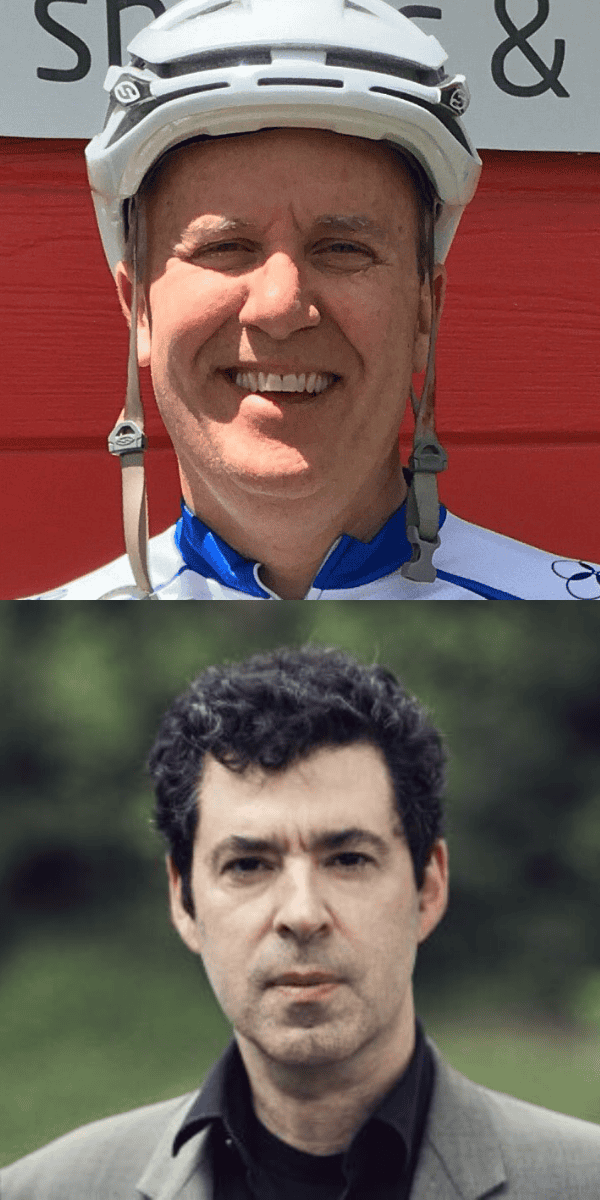
Jason Stanley, Professor of Philosophy, Yale University
Related Blogs
-
December 31, 2018
Related Resources
Books
Stanley, Jason (2018). How Fascism Works: The Politics of Us and Them
Web Resources
Dalton, Greg. “Welcome to Climate One.” Climate One
Get Philosophy Talk
